Look How Far
ABC chart for parents
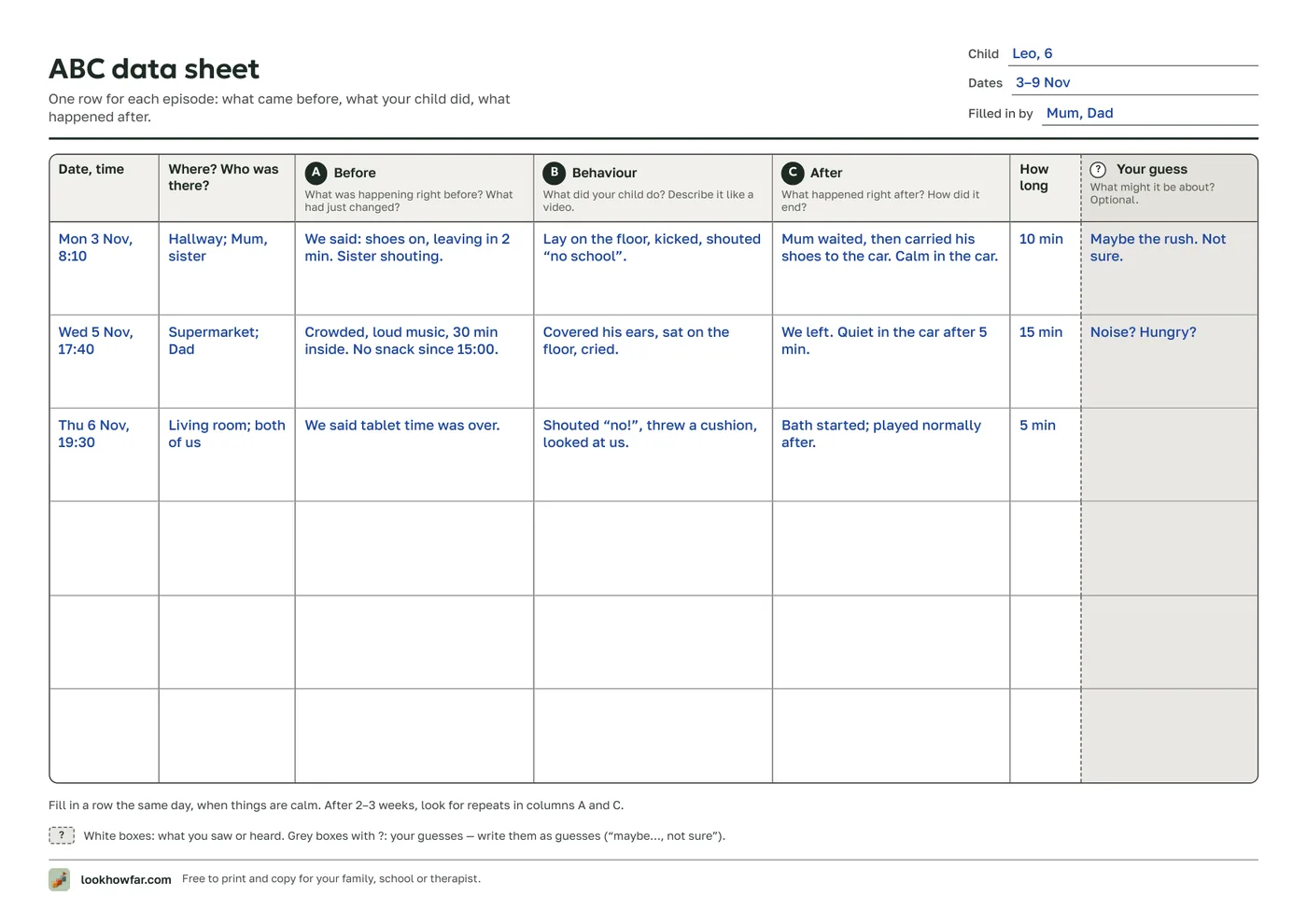
An ABC chart — antecedent, behaviour, consequence — is the ABC data sheet that teachers and therapists use. Here it is in plain words for home: one row per episode — before, behaviour, after.
PDF, US Letter40 KBPDF, A439 KB
1 page · black and white · no sign-up
Why it helps
One hard moment tells you little. Ten rows side by side often show a pattern: the same time of day, the same change of plan, the same thing that ends it. A stands for antecedent — what came just before; B is the behaviour — what your child did; C is the consequence — what happened right after. You do not need the terms to use the sheet.
What is on the sheet
One landscape page with six rows: date and time, where and who was there, A — what was happening right before, B — what your child did, C — what happened right after, how long it lasted, and a grey column for your guess. The column headers explain each box in plain words.
How to fill in an ABC chart at home
- Fill in a row the same day, once things are calm. Two or three minutes is enough.
- In column B, describe what a video would show: “covered his ears, lay on the floor” — not “was naughty” or “had a meltdown”.
- Put guesses only in the grey column, and write them as guesses: “maybe the noise — not sure”.
- After two or three weeks, read columns A and C from top to bottom and look for repeats.
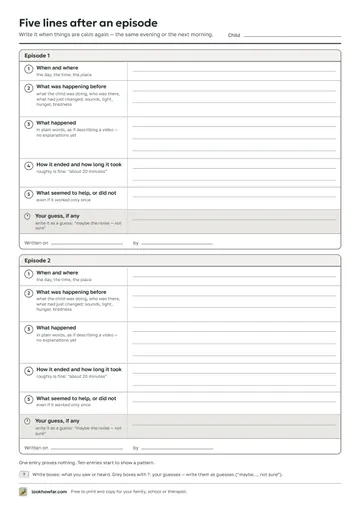
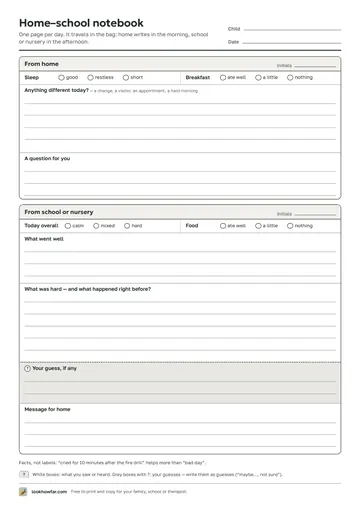
White boxes are for what you saw. Grey boxes with ? are for guesses. A fact is not a guess — the same rule as in our notes, and in Look How Far.
When to show it to a specialist
Bring the sheet to an appointment or a school meeting when episodes are frequent, change, or worry you — a few weeks of rows say more than “he has a lot of meltdowns”. Bring one or two questions you want answered. A specialist can help you understand what a pattern may mean; the sheet only shows it.
Questions parents ask
What does ABC stand for?
Antecedent (what happened just before), Behaviour (what the child did) and Consequence (what happened right after). Together they show what a behaviour might be connected to.
How many entries do I need?
Ten or more over two or three weeks is a good start. One entry shows a moment; many entries can show a pattern.
Is an ABC chart only for “bad” behaviour?
No. You can record anything you want to understand: a meltdown, refusing to eat, running off — or a new skill that appears only sometimes.
What is the difference between an ABC chart and a behaviour log?
An ABC chart is a table, one row per episode, good for spotting repeats. A behaviour log like our five lines gives each episode more room and asks how it ended and what helped.
These sheets are for observations. They do not diagnose and do not replace your child’s doctor or specialist.