Look How Far
Home–school communication log
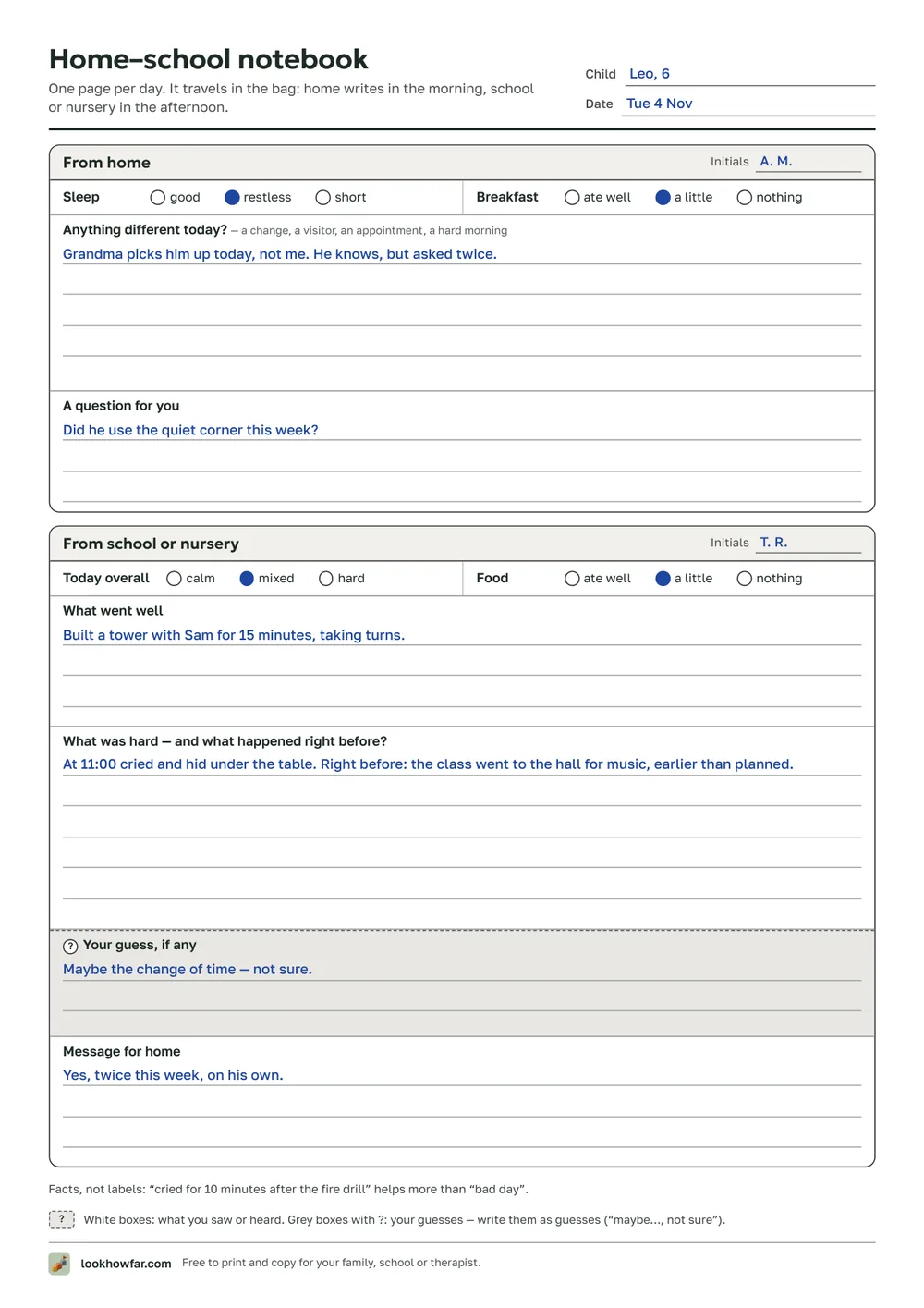
A home–school communication log — a parent–teacher page for every day that travels in the school bag: home writes in the morning, school or nursery in the afternoon.
PDF, US Letter48 KBPDF, A447 KB
1 page · black and white · no sign-up
Why it helps
Many autistic children do not tell you what happened at school, and the teacher does not know about the restless night. A short shared page closes that gap. The question “what happened right before?” is the same one we suggest asking the school in our note with five questions.
What is on the sheet
One page per day in two parts. From home: sleep and breakfast to tick, anything different today, a question for the teacher. From school: the day and food to tick, what went well, what was hard and what happened right before, a grey box for a guess and a message for home — each part with initials.
How to use a parent–teacher communication log
- In the morning, tick sleep and breakfast and write anything different about today.
- Add one question for the teacher, if you have one.
- School ticks the day and food, and writes what went well, what was hard — and what happened right before.
- Read it in the evening and reply on the next day’s page.
White boxes are for what you saw. Grey boxes with ? are for guesses. A fact is not a guess — the same rule as in our notes, and in Look How Far.
When to show it to a specialist
Pages where the same hard moment comes back several times are good material for a meeting with the school or your child’s specialist. Ask the school before showing their notes to others. Keep the pages in a folder: a month says more than one day.
Questions parents ask
What is a home–school communication log?
A short daily page shared by parents and teachers. It closes the gap for children who do not tell you about their day, and lets the teacher know about a bad night.
How do I ask the teacher to use it?
Show the example and ask for two minutes a day. Offer to tick the boxes yourself and keep the questions short.
What should the teacher write?
Facts rather than labels: what happened and what came right before. “Cried after the fire drill” helps more than “bad day”.
Can I show the school’s notes to a specialist?
Ask the school first. Many teachers are glad to share, especially for a meeting about support.
These sheets are for observations. They do not diagnose and do not replace your child’s doctor or specialist.