Look How Far
All about me
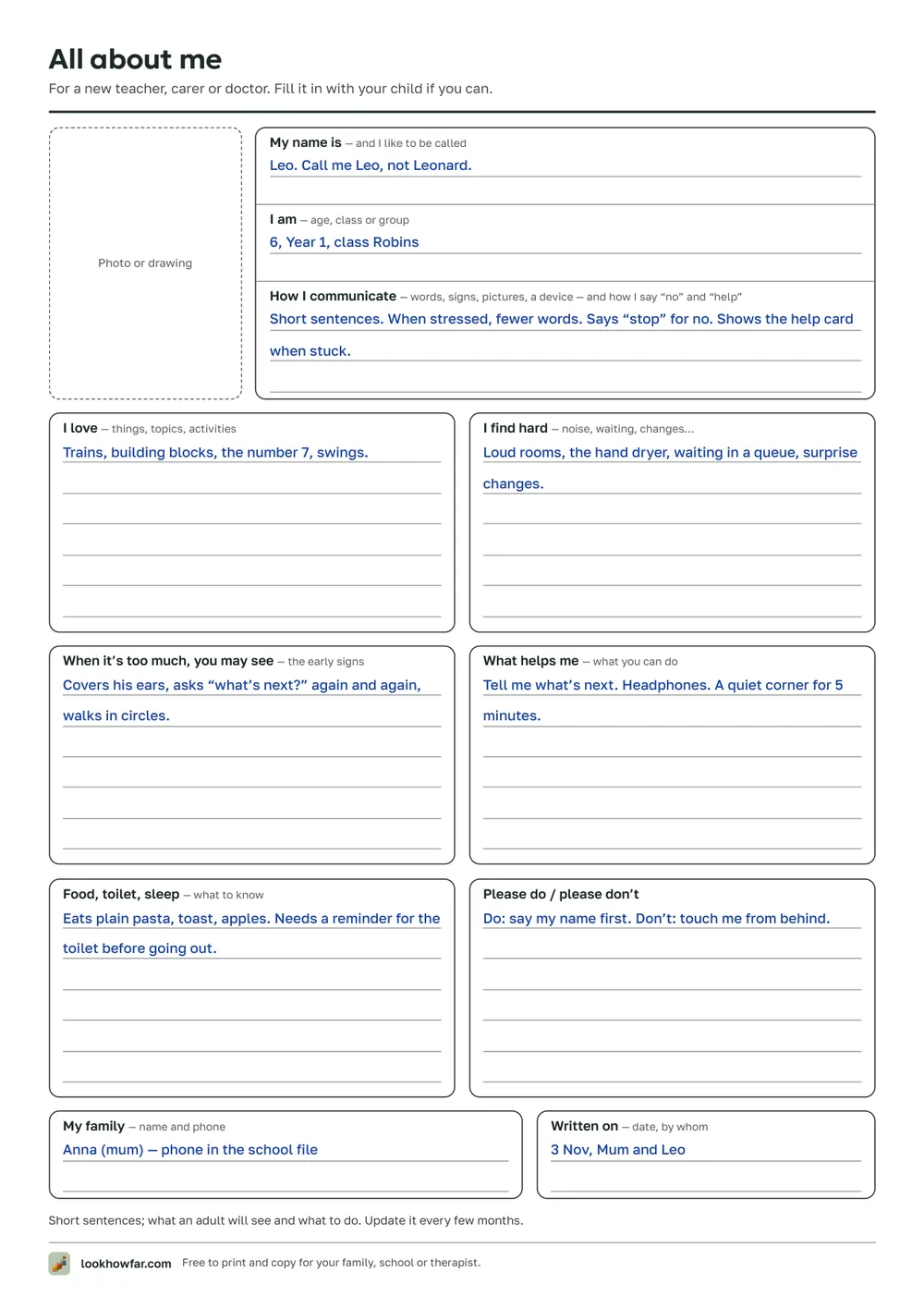
An “All about me” page for a new teacher, carer, babysitter or doctor: in two minutes they know how your child communicates, what they love, what is hard, what overwhelm looks like and what helps.
PDF, US Letter44 KBPDF, A444 KB
1 page · black and white · no sign-up
Why it helps
A new adult — a supply teacher, a nurse, a holiday club helper — usually has no time to read reports. One page with your child’s own words and the few things that really matter (“covers his ears before a meltdown”, “say first–then, not questions”) can prevent a hard day. Children who can take part enjoy choosing what goes on it.
What is on the sheet
One page: a space for a photo or drawing, name, age and how your child communicates, then six boxes — I love, I find hard, when it’s too much you may see, what helps me, food, toilet and sleep, please do / please don’t — and a contact box with the date.
How to fill in the All about me template
- Fill it in with your child if you can: let them choose the photo or drawing and their favourite things.
- Write short, concrete sentences: what an adult will see and what they should do.
- In “When it’s too much”, describe the early signs — this is the part new adults need most.
- Add a contact and the date. Update it every few months, and give a copy to every new adult in your child’s day.
When to show it to a specialist
Bring the page to a first appointment with a new doctor, dentist or therapist — and to the hospital. Many clinics have their own forms; this page can sit on top and save you from repeating the same things. Write facts and what helps, not diagnoses or medication: those belong in your child’s medical record.
Questions parents ask
What is an “All about me” page?
A one-page profile of a child written for the adults around them: who they are, how they communicate, what they love, what is hard and how to help. Schools also call it a one-page profile or a pupil passport.
Who should get a copy?
Anyone new in your child’s day: a new teacher or assistant, a babysitter, a holiday club, grandparents, a doctor or dentist. Keep one in the school bag.
Should I write the diagnosis on it?
You decide. Many families write how the child communicates and what helps rather than labels — that is what a new adult needs in the moment.
How often should I update it?
Every few months, and before any big change: a new class, a new school, a hospital visit.
These sheets are for observations. They do not diagnose and do not replace your child’s doctor or specialist.