Look How Far
Reward chart for kids
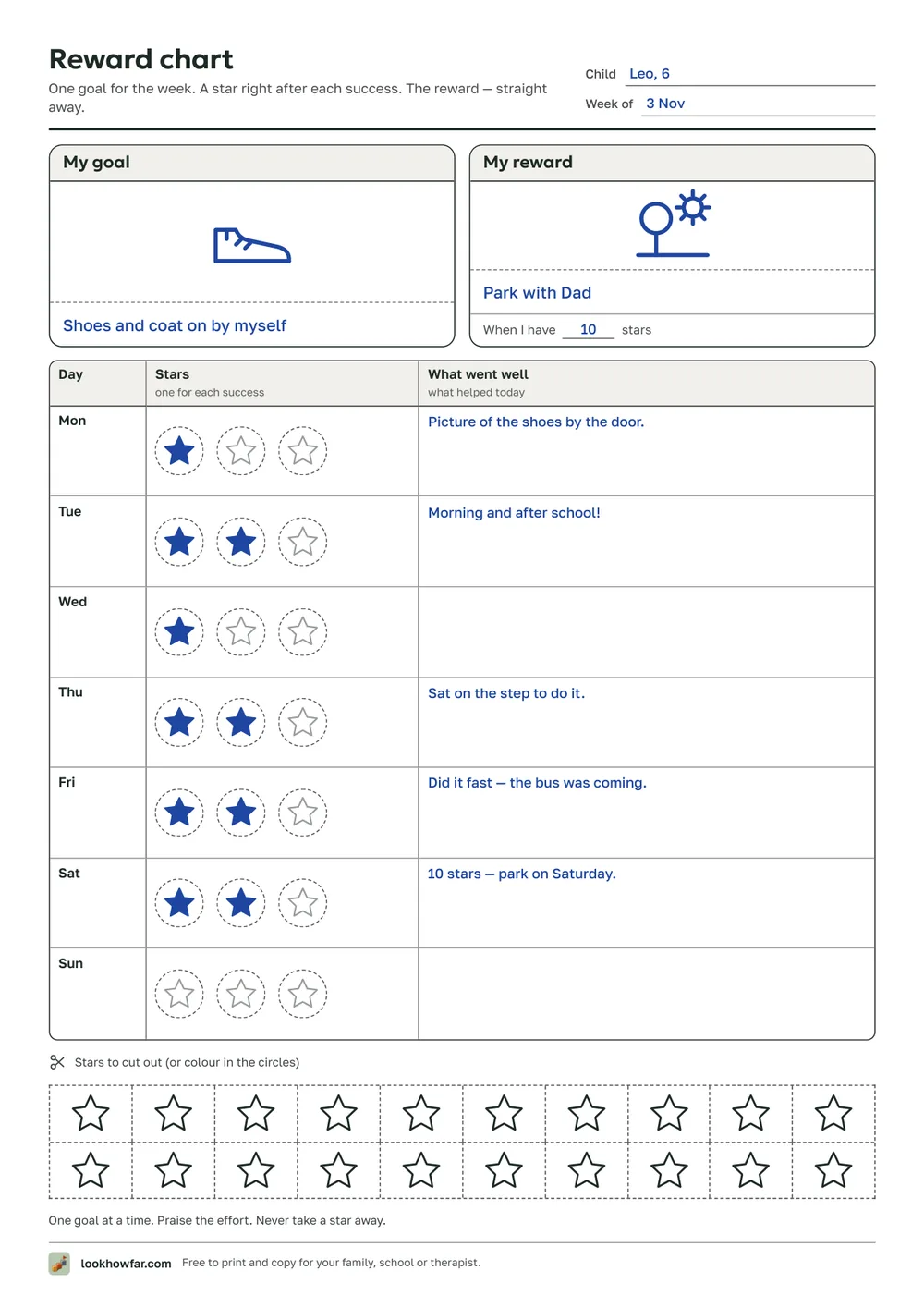
A weekly reward chart — or sticker chart — for one clear goal: a picture of the goal, a picture of the reward, up to three stars a day, a line for what went well and twenty stars to cut out.
PDF, US Letter107 KBPDF, A4108 KB
1 page · black and white · no sign-up
Why it helps
A goal that takes days — putting on shoes by yourself, sleeping in your own bed, trying one new food — is hard to keep going when the reward feels far away. A reward chart makes each small success visible, and shows you which days went well and why. It works best with one goal at a time, written in a way your child understands.
What is on the sheet
One page: two big boxes — “My goal” and “My reward”, each with room for a picture and words — and a line for how many stars it takes, then a week table with three stars a day and a column for what went well, and a strip of twenty stars to cut out or colour in.
How to use a reward chart
- Choose one goal and write it as an action your child can see: “I put on my shoes and coat by myself”, not “be good”.
- Agree on the reward together, before you start, and how many stars it takes. Start low so the first reward comes within a few days.
- Give a star right after the success, with a few words of praise. Never take a star away for something else.
- At the end of each day, write one line about what helped. When the stars are reached, give the reward straight away.
When to show it to a specialist
If your child’s school or therapist uses a reward system, ask how theirs works and use the same words and steps at home. A reward chart is a support for motivation, not a treatment. If it starts to cause distress — tears over a missing star, worry about losing — stop it and talk to the people who know your child.
Questions parents ask
What is a reward chart?
A chart where a child collects stars or stickers for a clear goal, and gets a reward agreed in advance when they reach a number of stars. It makes progress visible.
Reward chart or token board?
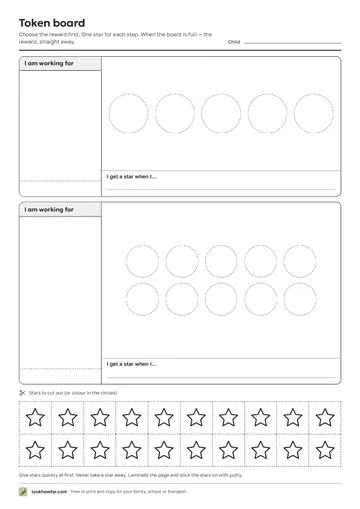
A token board is for one short task right now — a few minutes. A reward chart covers a goal over a week. Young children and children who find waiting hard often do better with a token board first.
How many stars should the reward take?
Few at the start, so the first reward comes within two or three days. When it works, ask for a few more stars or move to a new goal.
Is a reward chart bribery?
No — the reward is agreed in advance and earned by a clear action, and the praise matters as much as the star. Over time, the goal becomes a habit and the chart can stop.
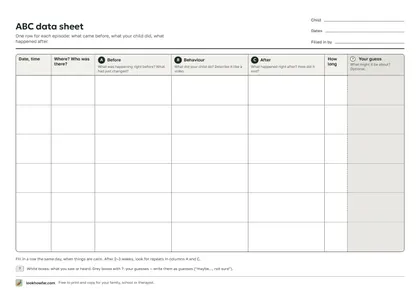
These sheets are for observations. They do not diagnose and do not replace your child’s doctor or specialist.