Look How Far
Visual schedule for the day
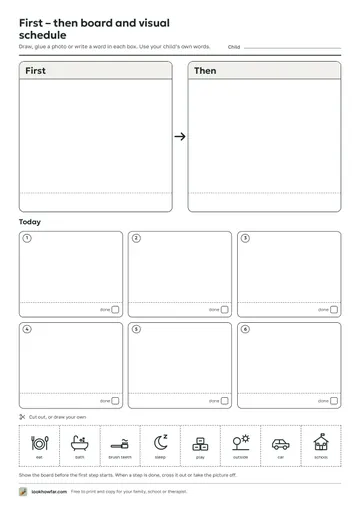
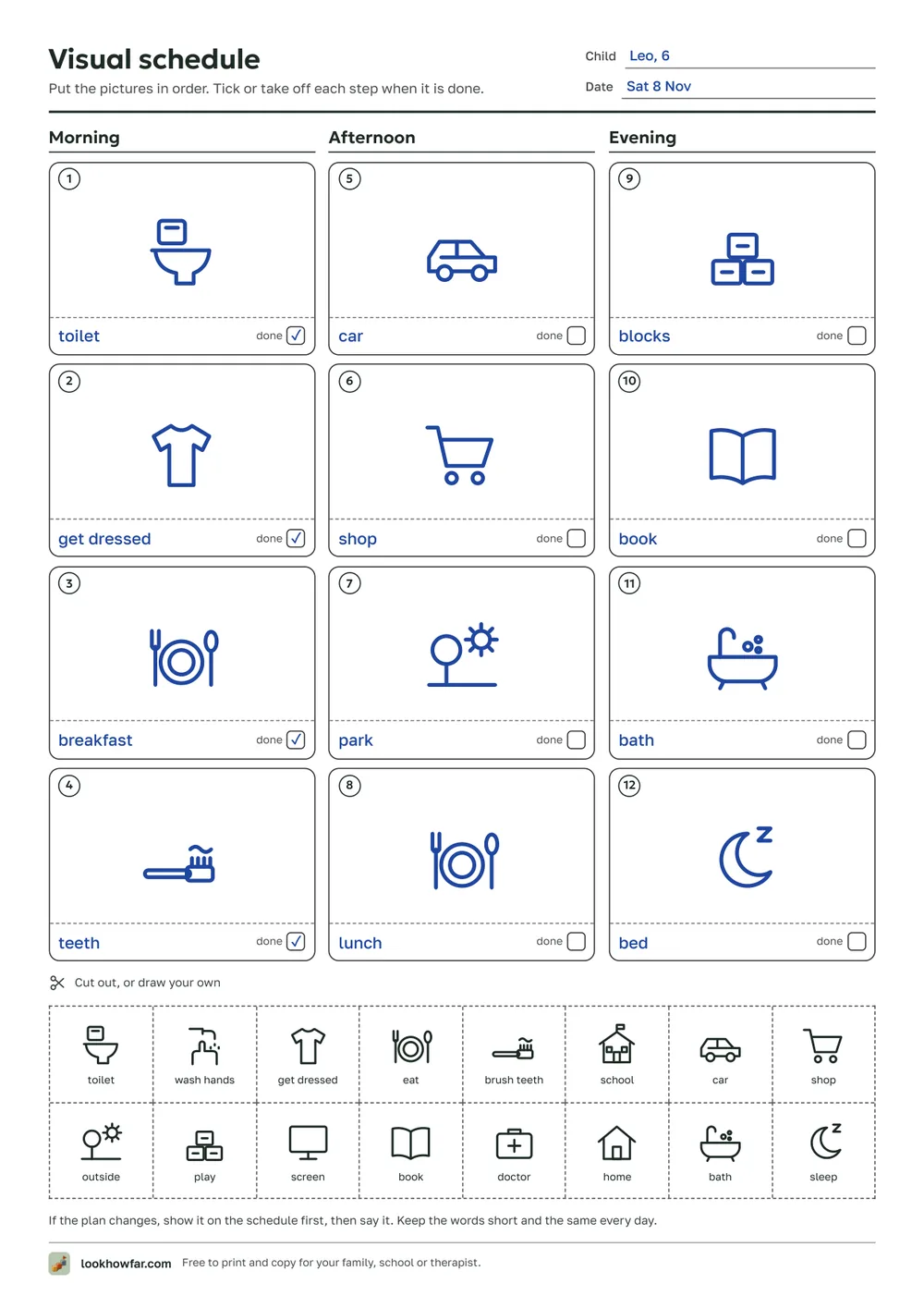
A daily visual schedule in three parts — morning, afternoon, evening — with twelve boxes for the steps of the day and sixteen simple picture cards to cut out, or empty boxes for your own drawings and photos.
PDF, US Letter80 KBPDF, A479 KB
1 page · black and white · no sign-up
Why it helps
Many autistic children find the day easier when they can see it: what is happening now, what comes next, and when the thing they are waiting for will come. A visual schedule answers “what’s next?” without words, and makes changes less of a surprise — you move or cross out a picture instead of announcing a new plan.
What is on the sheet
One page: three columns (morning, afternoon, evening) with four numbered boxes each — a space for a picture, a word, and a “done” box — and a strip of sixteen pictures to cut out: toilet, wash hands, get dressed, eat, brush teeth, school, car, shop, outside, play, screen, book, doctor, home, bath and sleep.
How to use a visual schedule at home
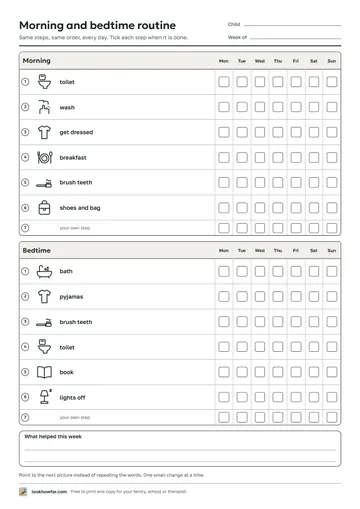
- Cut out the pictures you need, or draw your own. Photos of your own home, car and school often work best.
- Fill in the day in order, top to bottom. Start with a short part of the day — just the morning — if this is new.
- Go through it with your child before the day starts, and come back to it before each change.
- When a step is done, tick it, cross it out or take the picture off. If the plan changes, show the change on the schedule.
When to show it to a specialist
If your child already uses pictures or a schedule at school or in therapy, ask which ones — the same symbols at home and at school help most. A speech and language therapist or occupational therapist can suggest how many steps to show at once. A visual schedule is a support, not a treatment, and it is fine to adapt it.
Questions parents ask
What is a visual schedule?
A row or column of pictures that shows the steps of a day or an activity in order. The child sees what is happening now and what comes next, instead of having to remember or ask.
How many pictures should a visual schedule have?
As many as your child can follow. Some children need two (that is a first–then board); others manage a whole day. Start small and add steps when it works.
Photos or drawings?
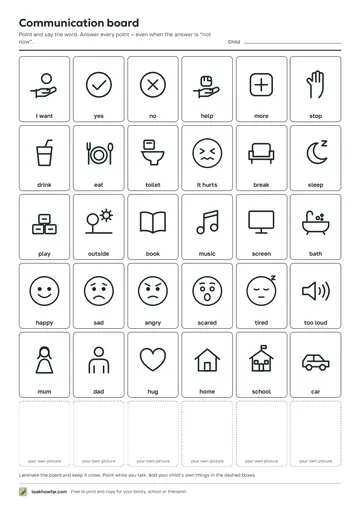
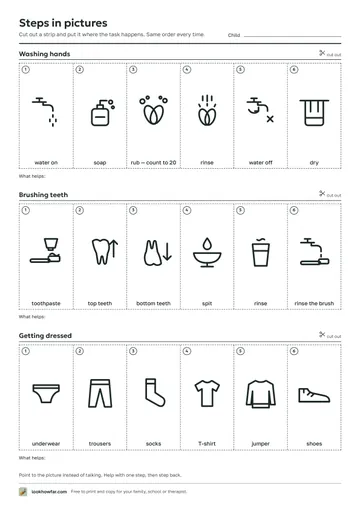
Whatever your child recognises. Many children understand photos of their own things best; others prefer simple drawings. The cards on this sheet are plain line drawings you can colour in.
Should we use it every day?
It helps most when it is predictable: the same place, the same routine of checking it. Many families use it on school days and on days with something new — a doctor’s visit, a trip, a holiday.
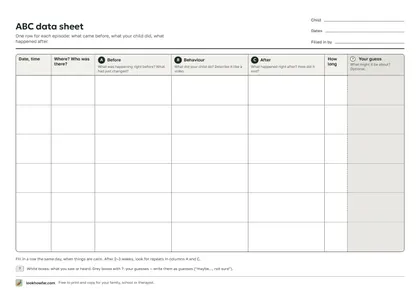
These sheets are for observations. They do not diagnose and do not replace your child’s doctor or specialist.