Look How Far
Choice board and break cards
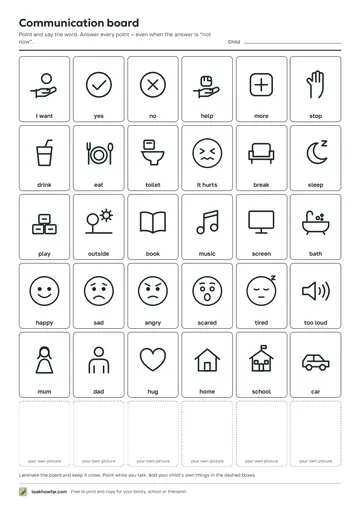
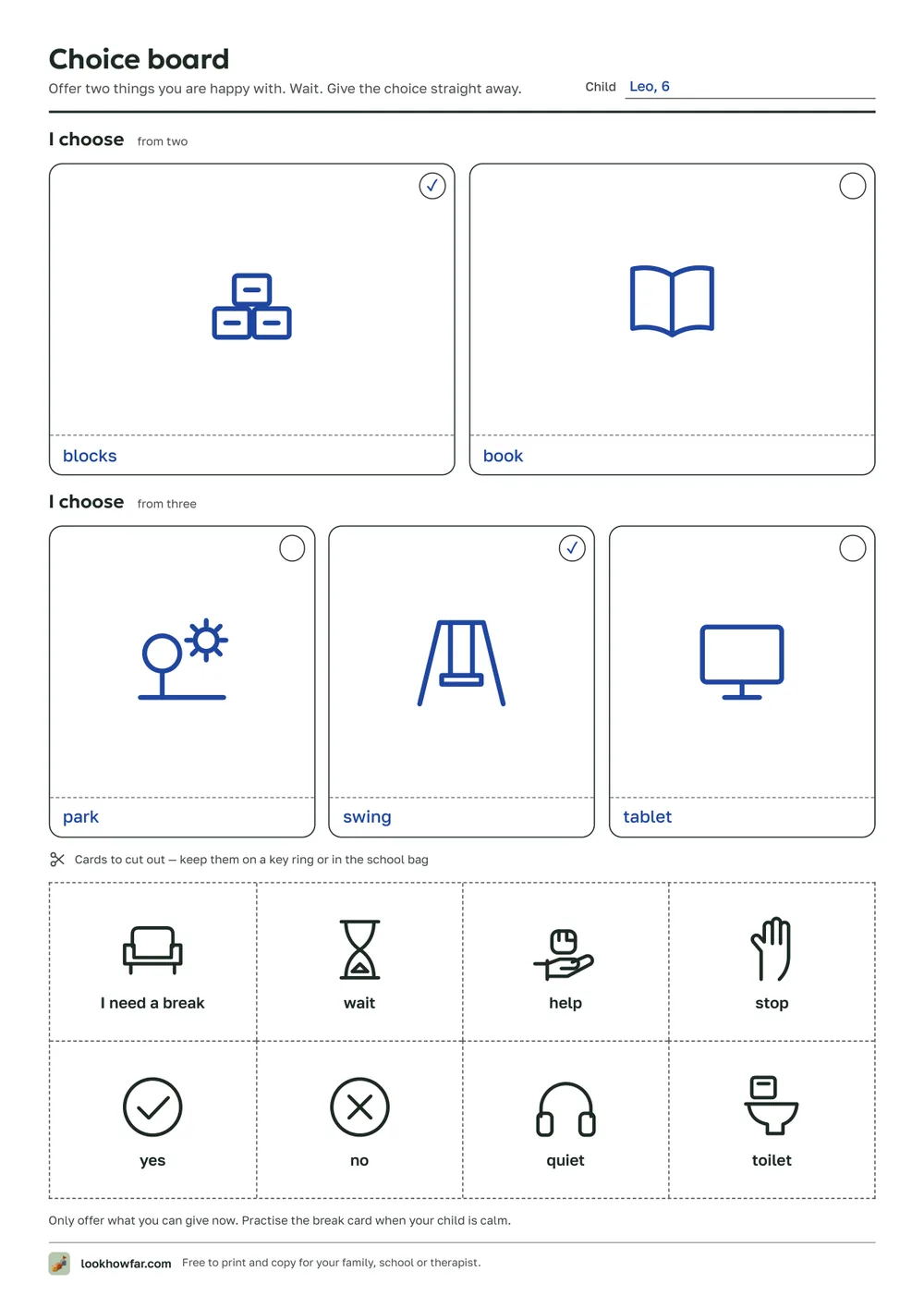
A choice board template for choosing from two or from three, and eight cards to cut out — “I need a break”, “wait”, “help”, “stop”, “yes”, “no”, “quiet”, “toilet” — so your child can ask without words.
PDF, US Letter54 KBPDF, A455 KB
1 page · black and white · no sign-up
Why it helps
Open questions — “What do you want to do?” — are hard for many autistic children, especially when tired. Two or three pictures to choose from are much easier, and give your child real control over part of the day. Break and help cards do the same for hard moments: a child who can show “break” does not have to escalate to be heard.
What is on the sheet
One page: a board for choosing from two and a board for choosing from three, each box with space for a picture, a word and a tick for the choice; and eight cards to cut out: I need a break, wait, help, stop, yes, no, quiet, toilet.
How to use a choice board
- Offer only choices you are happy with — two at first. Draw or stick a picture in each box and say the words.
- Wait. Let your child point or take the picture. Then give the choice straight away, as promised.
- Cut out the cards and keep them where hard moments happen: on a key ring, in the school bag, on the fridge.
- Practise the break card when your child is calm. When they show it, give the break — every time at first.
When to show it to a specialist
If your child already uses symbols, a speech app or cards at school, use the same ones at home. A speech and language therapist can help choose and teach cards; an occupational therapist can suggest what a good break looks like for your child.
Questions parents ask
What is a choice board?
A board with two or more pictures of options — activities, snacks, toys. The child points at or hands over the picture they want. It makes choosing possible without words.
How many choices should I offer?
Two to start with. Move to three when two is easy. More choices are harder, not easier, especially when tired or upset.
What if my child chooses something I cannot give?
Only put on the board what you can give right now. If something is not possible, take its picture off before you offer the board.
Will my child use the break card all the time?
Often at first — that is how they learn it works. Keep breaks short and agreed, and return to the task after. Over time most children use it when they really need it.
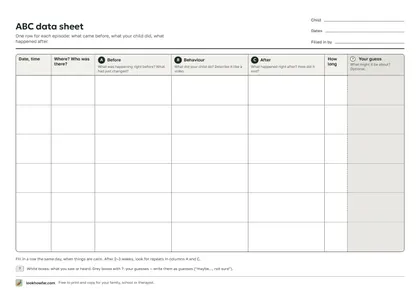
These sheets are for observations. They do not diagnose and do not replace your child’s doctor or specialist.