Look How Far
Morning and bedtime routine chart
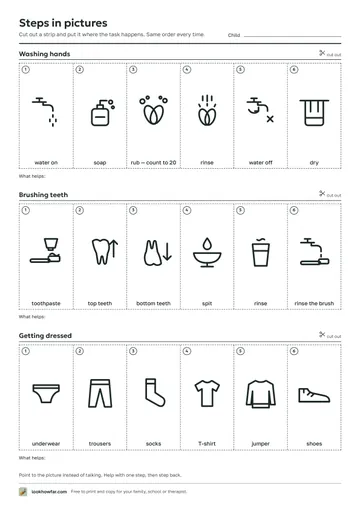
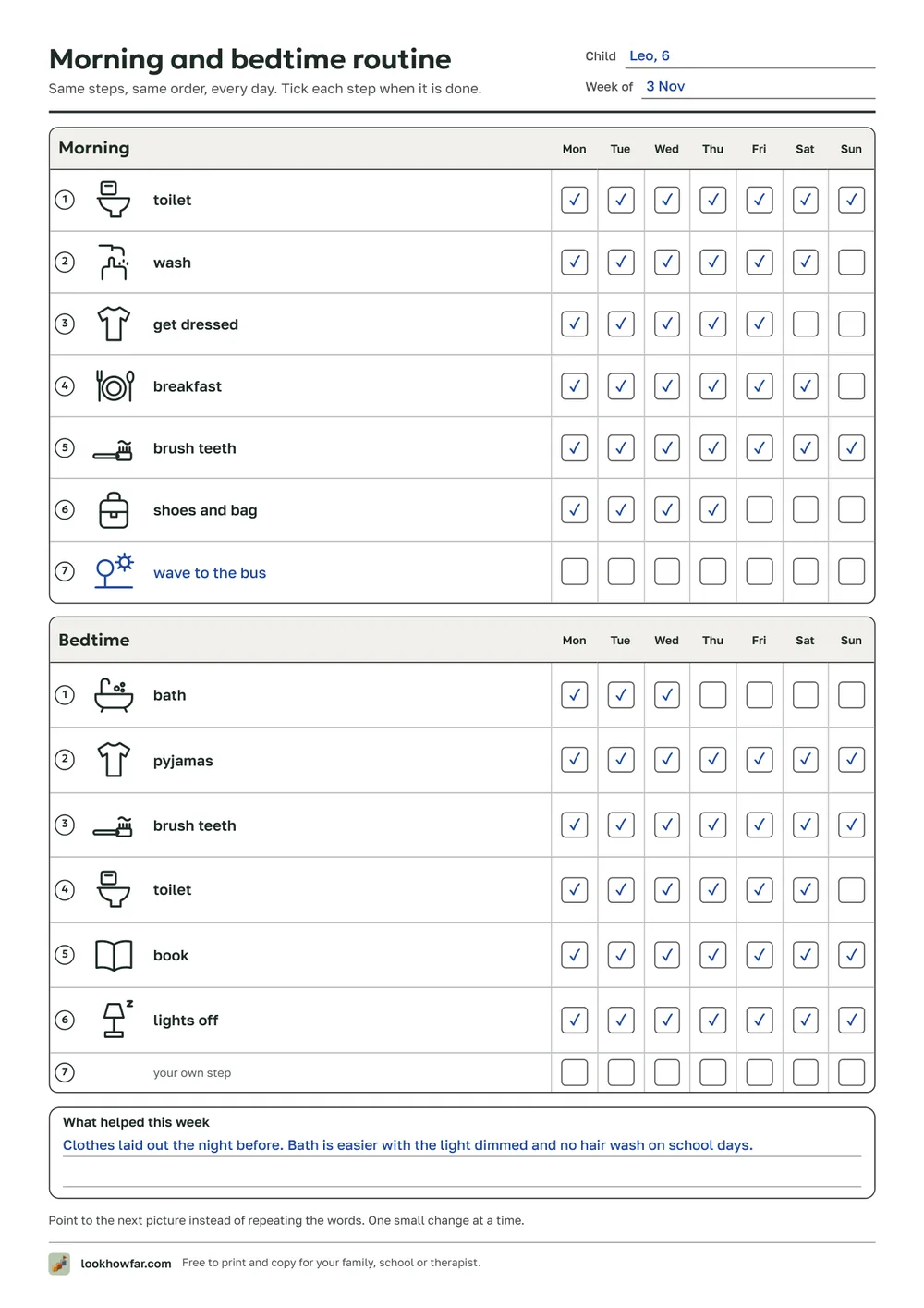
A morning routine chart and a bedtime routine chart on one page: six steps in pictures each — toilet, wash, dress, breakfast, teeth, shoes and bag; bath, pyjamas, teeth, toilet, book, lights off — a row for your own step and a tick for every day of the week.
PDF, US Letter73 KBPDF, A473 KB
1 page · black and white · no sign-up
Why it helps
Mornings and bedtimes are when many families argue most: the same steps every day, but under time pressure or when everyone is tired. A routine chart turns your reminders into pictures your child can check on their own, in the same order every day. The ticks show the steps that work and the one that always gets stuck.
What is on the sheet
One page in two parts. Morning: toilet, wash, get dressed, breakfast, brush teeth, shoes and bag. Bedtime: bath, pyjamas, brush teeth, toilet, book, lights off. Each step has a number, a picture and a word, plus seven tick boxes, Monday to Sunday; each part has an empty row for your own step. At the bottom, a box for what helped this week.
How to use the routine chart
- Look at the steps with your child. If your order is different, cross out and write your own — or use the empty row.
- Put the chart where the routine happens: the bathroom door, next to the bed, by the front door.
- Point to the next picture instead of repeating the instruction. Let your child tick each step.
- At the end of the week, look at the ticks: which step is always missing? Write what helped in the box at the bottom.
When to show it to a specialist
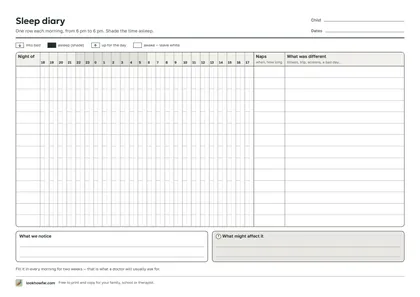
If sleep stays very short, your child wakes for long stretches at night, snores loudly or seems sleepy all day, talk to your child’s doctor and bring a sleep diary. An occupational therapist can help if dressing, washing or the feel of clothes is the hard part of the routine.
Questions parents ask
What should a bedtime routine chart include?
The same few steps in the same order every evening, ending in bed: for example bath, pyjamas, teeth, toilet, a book, lights off. Fewer steps are easier to keep.
How long should a morning routine take?
It depends on your child; time it once without hurrying. Then start the routine early enough that there is no rush — rushing is when steps get skipped.
Pictures or words?
Both. Pictures help children who do not read yet, or who find instructions hard to follow when tired or stressed. The word under each picture helps you use the same words every day.
Is this the same as a visual schedule?
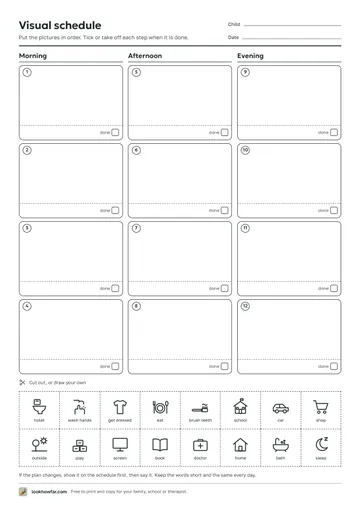
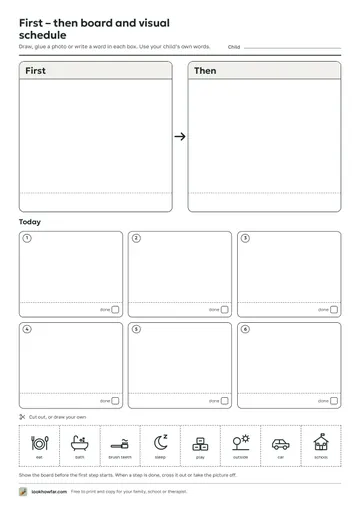
Close. A visual schedule shows the whole day; a routine chart zooms in on the steps of one routine. Many families use both.
These sheets are for observations. They do not diagnose and do not replace your child’s doctor or specialist.