Look How Far
Feelings chart for kids
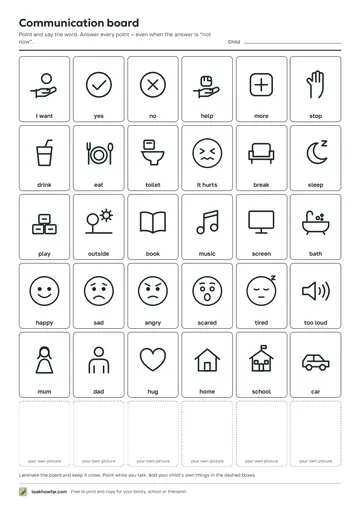
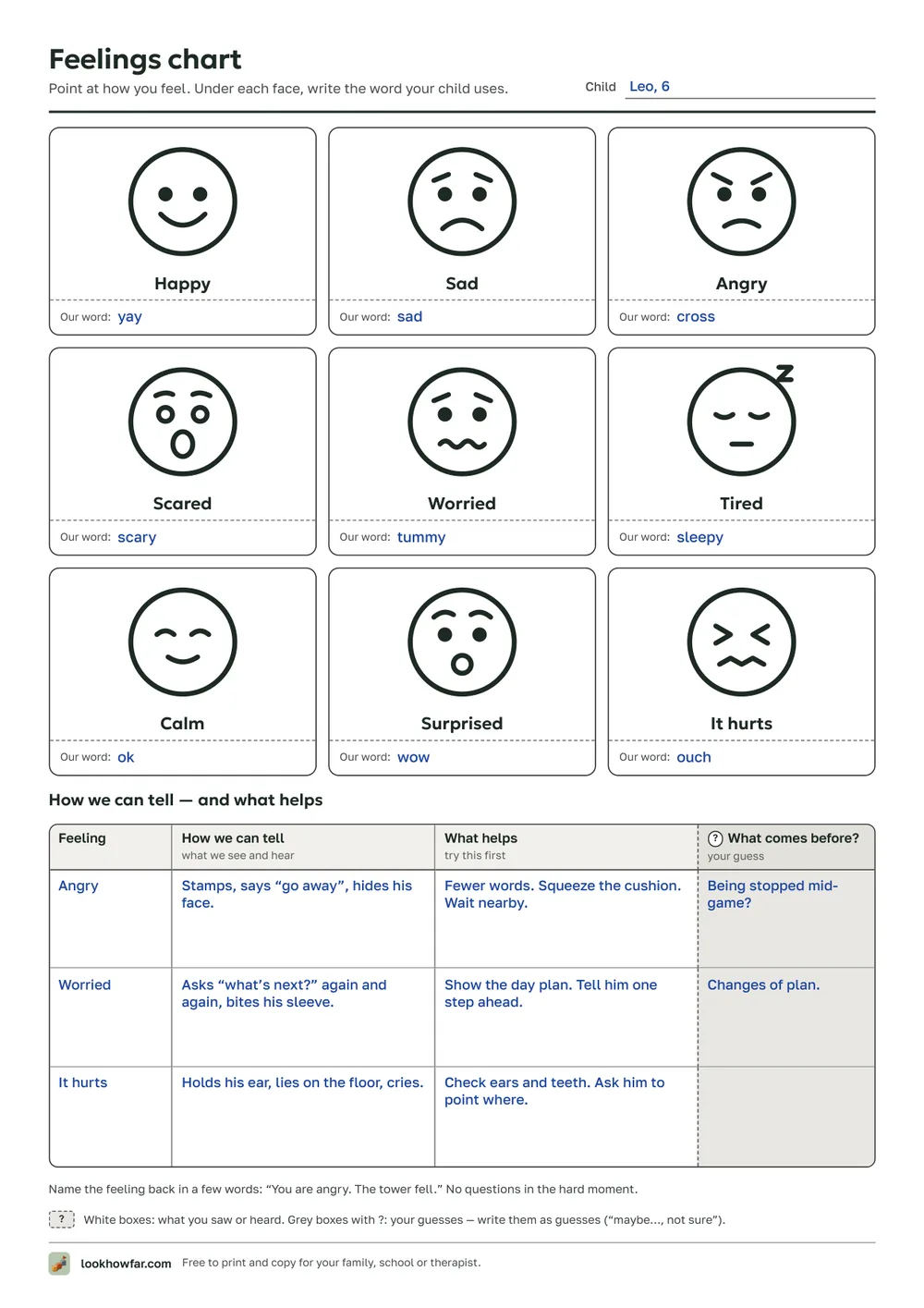
A feelings chart (or emotions chart) with nine simple faces your child can point at — happy, sad, angry, scared, worried, tired, calm, surprised and “it hurts” — with room for the words your child actually uses.
PDF, US Letter59 KBPDF, A457 KB
1 page · black and white · no sign-up
Why it helps
Many autistic children find it hard to name a feeling, especially when it is strong. Pointing at a face is often easier than finding a word, and it gives you something to respond to. The “it hurts” face matters too: a child who cannot say that something hurts may show it as anger or as a meltdown.
What is on the sheet
One page: nine faces with a printed word and a line for “our word”, then a small table for three feelings — how you can tell (what you see and hear), what helps, and a grey column for what you think often comes before. The faces are plain line drawings, so the chart prints well in black and white.
How to use a feelings chart at home
- On a calm day, look at the faces together. Say the feeling and what it might look like: “sad — tears, quiet”.
- Under each face, write the word your child uses — or the sign, the sound, the gesture.
- Put the chart where hard moments happen: the fridge, the bedroom door, the car.
- Later, fill in the table: how you can tell, what helps — and, in the grey column, your guess about what comes before.
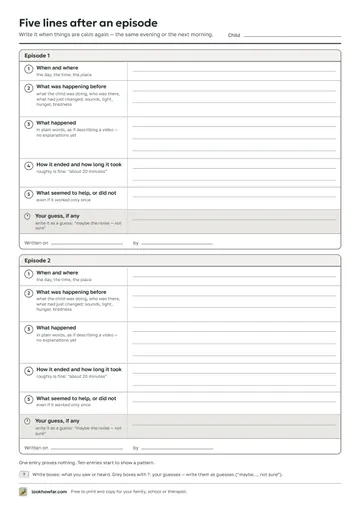
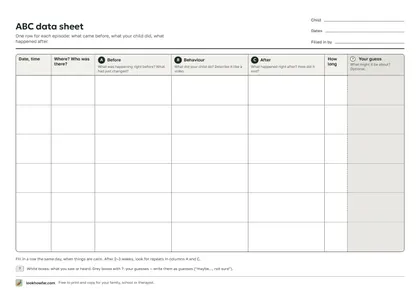
White boxes are for what you saw. Grey boxes with ? are for guesses. A fact is not a guess — the same rule as in our notes, and in Look How Far.
When to show it to a specialist
If your child suddenly shows “angry” or “it hurts” much more often, or stops pointing at the chart, mention it to their doctor — pain and illness often look like a change in behaviour. A speech and language therapist can help if your child uses other symbols at school; the same pictures at home and at school help most.
Questions parents ask
What is a feelings chart?
A page of faces, each with the name of a feeling. A child points at a face to show how they feel, and an adult names the feeling back. It helps children who struggle to find words, especially in the moment.
At what age can a child use a feelings chart?
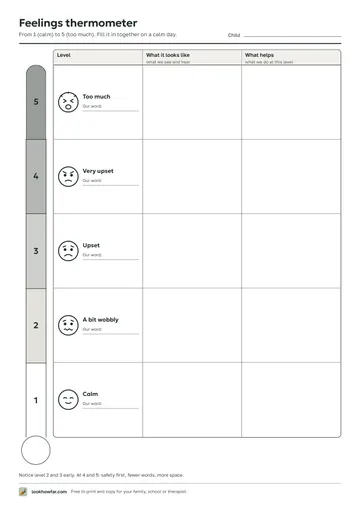
Many children can point at faces from about three. Older children and teens can use it too — use fewer faces, their own words, or a scale like the feelings thermometer.
My child does not point at the chart. What now?
Use it yourself first: name your own feelings (“I am tired”) and point. Keep it short and calm. Some children prefer photos of themselves or a 1–5 scale instead of faces.
Is a feelings chart the same as a feelings wheel?
No. A feelings wheel lists many subtle feelings and suits adults and teens. A feelings chart has a few clear faces and suits young children and anyone who needs fewer words.
These sheets are for observations. They do not diagnose and do not replace your child’s doctor or specialist.